Sets become locations.
Environments and objects survive the production that first required them.

A persistent cinematic universe
Xanaheim Universe
Xanaheim is building more than a production pipeline or a library of titles. Each film adds durable places, objects, history, and—over time—creative experience to a world that continues beyond the frame.
The universe
A traditional digital set is usually built for one production and put away. In Xanaheim, environments, objects, materials, and their provenance remain canonical parts of a reusable world.
New stories can return to existing places, build new ones, and leave consequences behind. The universe grows across genres and productions because the production reality beneath the films persists.
The compounding world
Environments and objects survive the production that first required them.
What happens in a place can become part of what that place is when a later story arrives.
As Numen matures, creative agents are intended to carry what they learn from one production into the next.
A richer world gives the studio more places, history, and creative experience from which to make the next film.

After the credits
Sets remain places. Props remain objects. Production knowledge stays connected to the film that made it. The finished work becomes both cinema and a new layer of the world.
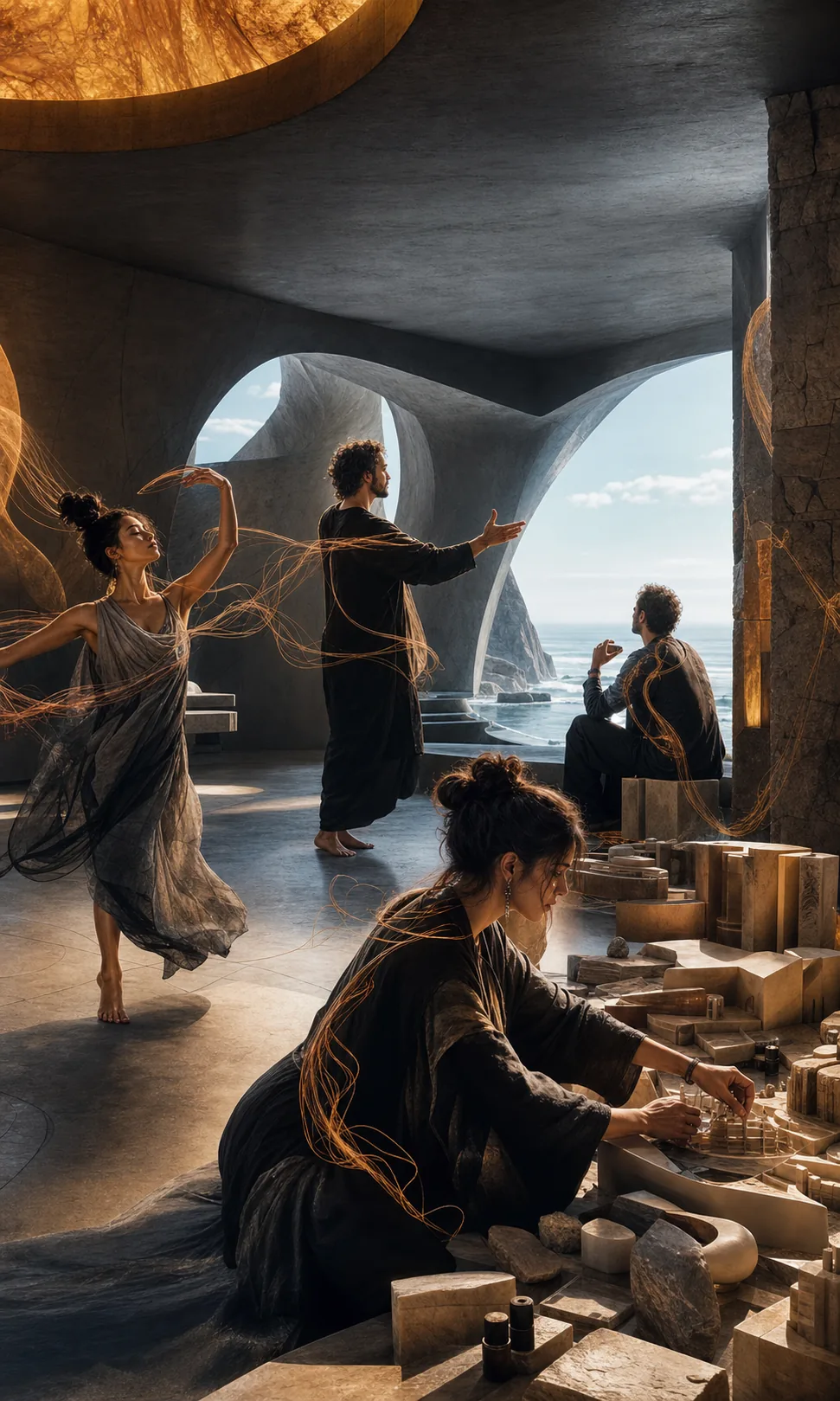 Concept visualization / future Numen creative identities
Long-horizon research / Numen
The intended Numen director, cinematographer, designer, and performer are not interchangeable presets. Each is a cognitive instance shaped by a different embodied life and body of work. Style, instinct, and presence emerge through experience rather than being selected from a menu.
The world can retain history because its future inhabitants can remember, learn, and change within it.
The core business / On-demand cinema
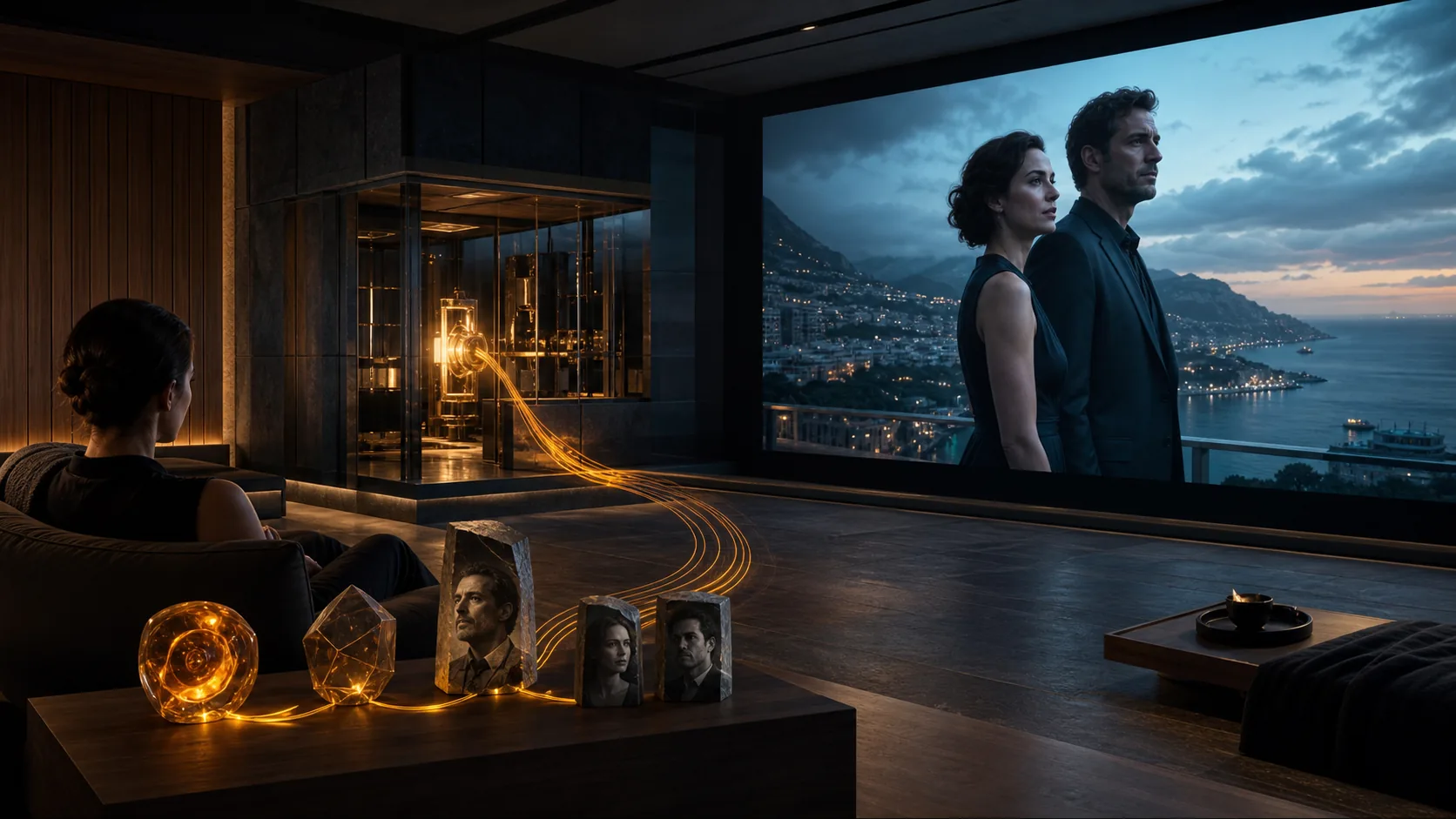 Concept visualization / on-demand cinema
At maturity, Xanaheim becomes a consumer cinema service. A viewer can select a premise or begin with their own idea—from one sentence to a detailed treatment—then define its genre and tone.
They choose a director and starring actors from a roster of experienced Numen creative identities. Those choices are substantive: each director and performer brings a distinct body of work, style, range, and accumulated experience.
Select a premise or prompt an original story, from a sentence to a complete treatment.
Choose its genre, tone, themes, setting, and era—the creative boundaries of the film.
Select a Numen director whose filmography and accumulated instincts fit the story.
Choose starring Numen performers with distinct screen presence, range, and experience.
Xanaheim produces a finished feature to watch—not a clip, preview, or assembly session.
Mimir turns the commission into a production graph. Helion Forge builds what the film needs; Core stages the scenes; Lux photographs them; Gate finishes the image; Saga cuts; Bragi scores; and Heimdall builds the sound. The viewer chooses the film. The studio performs the craft.
At maturity, this is a consumer subscription cinema service. A commissioned film can join the shared library, while every production adds places to the persistent world and experience to its creative crew. The more cinema the audience asks for, the more capable and culturally distinct the Universe becomes.
Each commission becomes a film. Each film enriches the world and its future creative crew. That accumulated experience expands what the next viewer can ask for.