01 / Helion Forge / Workshop

Helion Forge

Build what the camera will find.

Helion Forge gives artists, technical directors, and automated operators the same workshop for making coherent, reusable worlds.

Operated / Human, LLM, or future NumenDelivers / Canonical USD assets
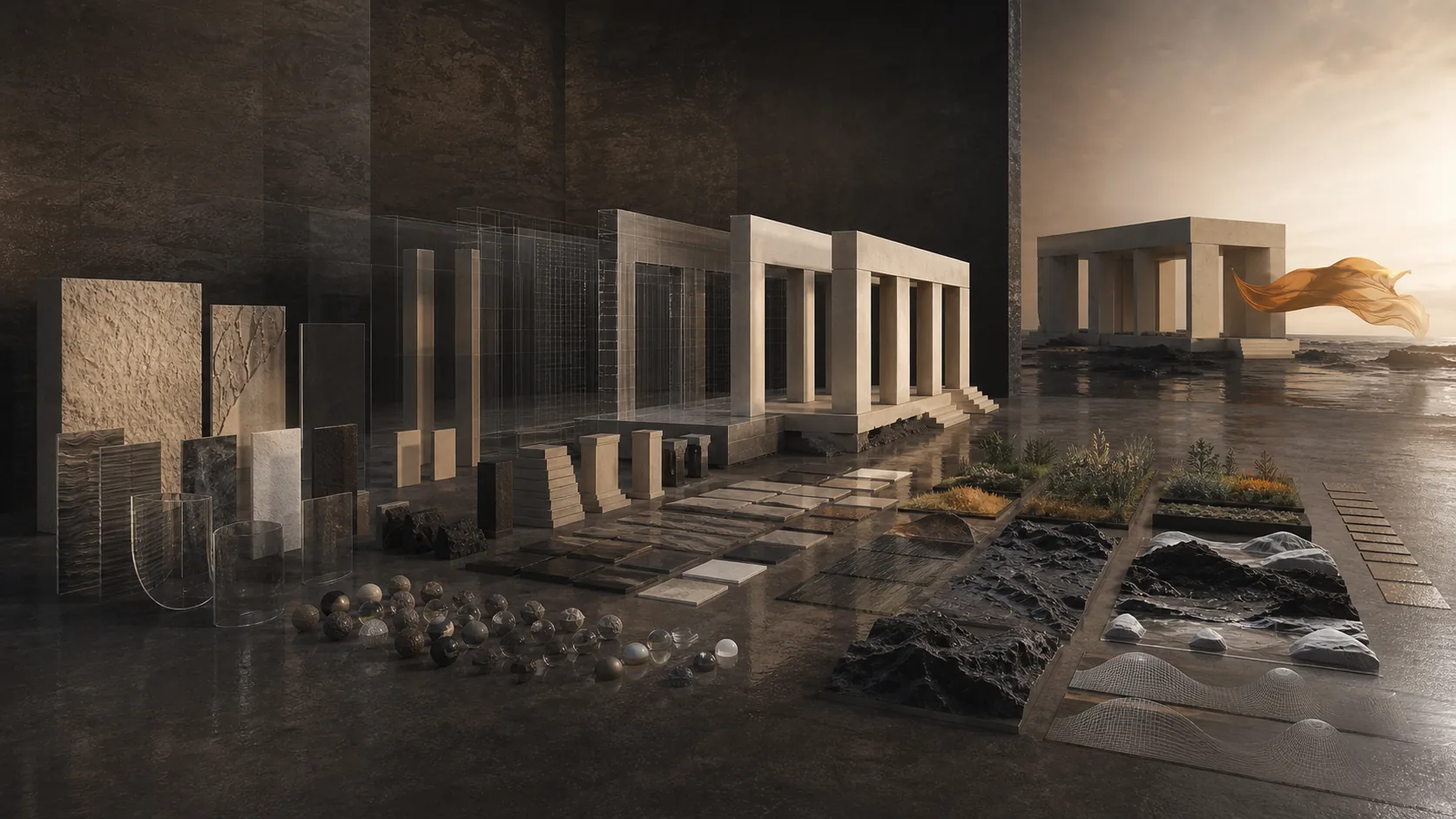
Concept visualization of the coastal pavilion assembled from geometry, stone, terrain, vegetation, and material studies in a contemporary digital workshop.Concept visualization / future asset study

The asset forge

Assets are capital. Scenes are ephemeral.

A prop is not a disposable image. It has structure, scale, material, behavior, provenance, and the ability to survive a new lens, a new light, or an entirely new scene.

Forge is a plural workshop: procedural construction, authored imports, scans, image-to-3D, and model-guided generation remain distinct tools. The operator chooses the method; every accepted asset crosses the same threshold.

One workshop / any operator

The operator changes. The standard does not.

An artist at a browser, an LLM orchestrator, and eventually Numen work through the same contracts. Each can choose a tool, inspect the result, compare variants, and send an asset through the same proof.

  1. 01 / ChoosePlural toolsHuman or machine selects
  2. 02 / MakeSource formAuthor, generate, scan, import
  3. 03 / RefineProduction formConvert, retopo, unwrap, bake
  4. 04 / ProveAsset gateInspect, render, constrain
  5. 05 / FreezeCanonical libraryImmutable, searchable, reusable
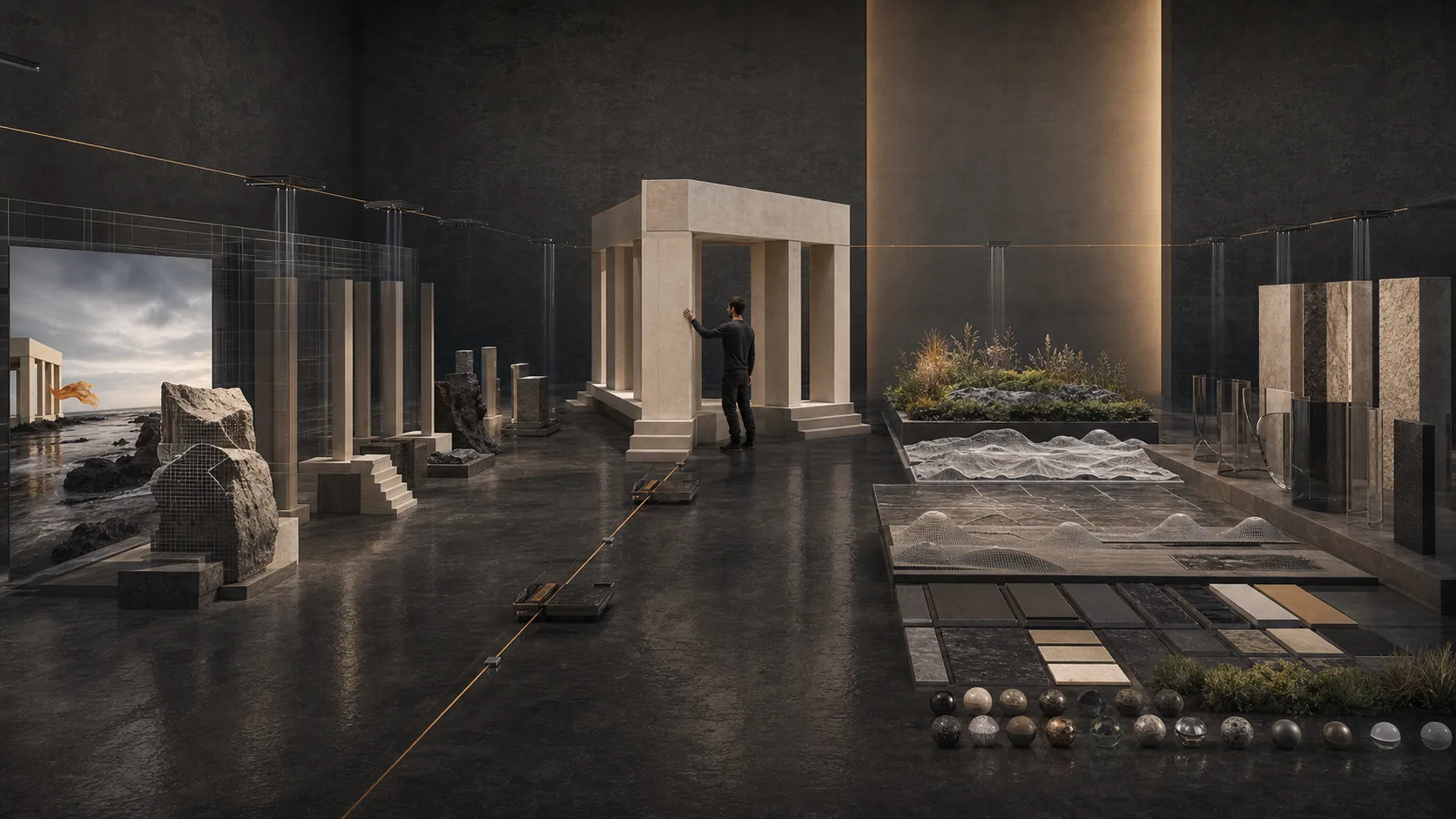
Concept study of a human technical artist inspecting a pavilion asset inside a digital workshop of geometry, terrain, vegetation, scans, and material samples.Concept visualization / operator workshop study

01 / The workshop

A workshop you can enter.

Artists can author in a DCC, bring scans and terrain, steer procedural systems, or review what an orchestrator proposes. Human work and automated work do not fork the pipeline.

Operators
Human · LLM · future Numen
Tools
Authored · procedural · scanned · neural
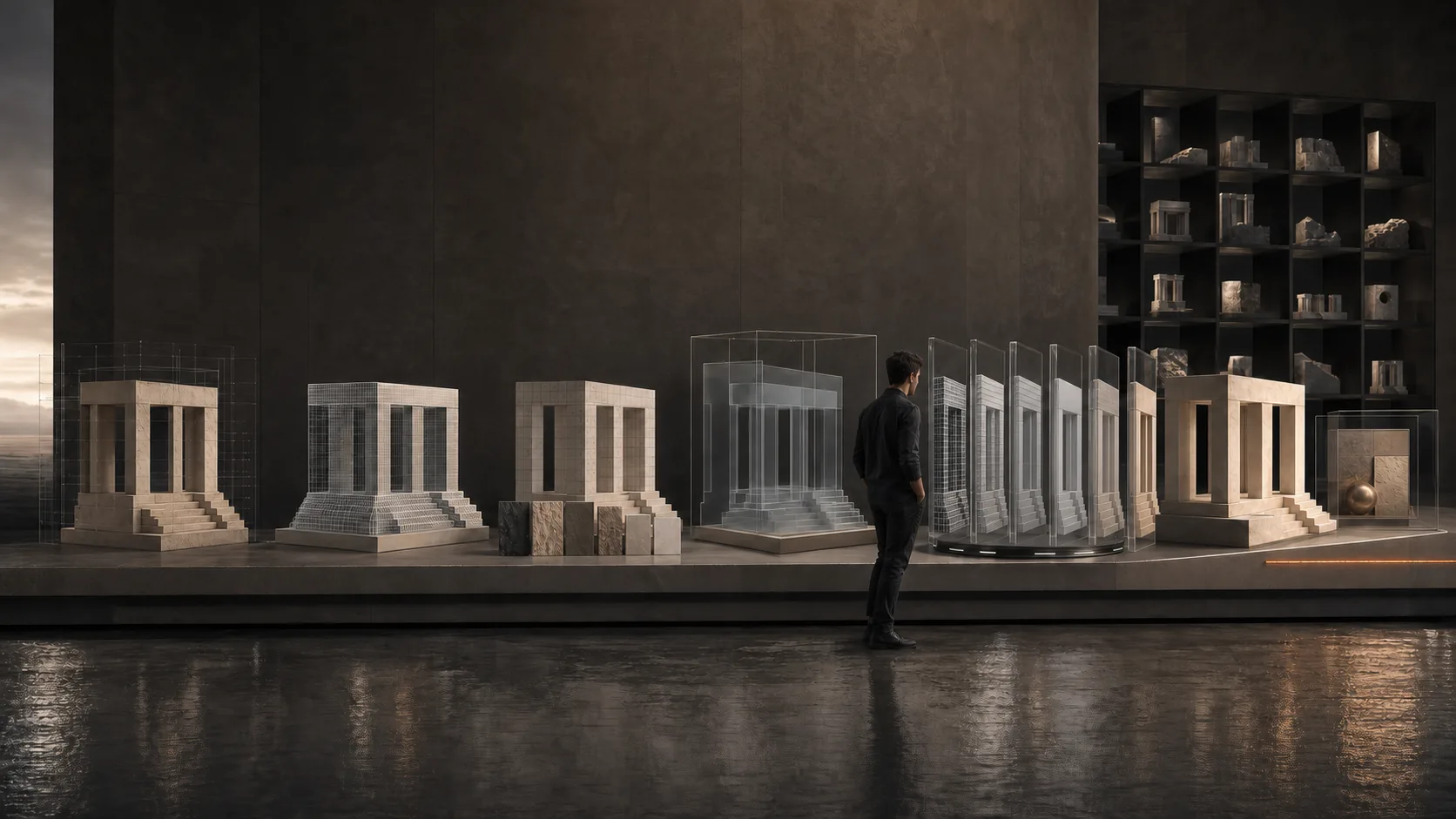
Concept study of one pavilion asset progressing through topology, material, collision, verification, and a canonical library while a human reviews it.Concept visualization / asset proof study

02 / The proof

Quality becomes an object.

One asset moves through cleanup, material authoring, LOD and collision, verification views, and the universal constraint gate. Failure leaves the library untouched; success freezes the complete bundle.

Proof
Scale · topology · UV · MaterialX
Bundle
USD · materials · textures · provenance

Review is a capability, not a separate mode

The same work remains visible whether a person made it, an LLM coordinated it, or Numen eventually authored it. A human can inspect, compare, repeat, or reject without leaving the workshop.

System architecture

Many ways in. One canonical asset out.

  1. 01 / SourcesAsset intent

    Procedural rules, authored imports, reference imagery, terrain data, and model-guided requests.

  2. 02 / ConstructGeneration tools

    Blender, converters, image-to-3D, authored geometry, and specialized procedural systems.

  3. 03 / AdmitConstraint gate

    Authored scale and axis, whole-asset topology, UVs, thickness, slope, and Lux-compatible MaterialX hard-fail here.

  4. 04 / PackageCanonical bundle

    USD, materials, textures, LODs, provenance, and integrity manifest remain together.

  5. 05 / PreserveImmutable library

    Content-addressed assets become searchable, reusable, re-lightable, and re-contextualizable.

Production contractsOpenUSD · MaterialX · SHA-256 provenance · deterministic promotion

The workshop

Construct. Prove. Preserve.

01 / Construct

Use the right way to make it.

Rules establish structure. Authored and learned methods add specificity. The operator selects the tool for the object.

02 / Prove

Make quality a gate.

Scale, topology, UVs, materials, collision, and verification renders are tested before an asset joins the world.

03 / Preserve

Keep the asset whole.

Canonical USD, MaterialX, textures, provenance, and integrity travel together in an immutable, searchable library.

Methods / Many ways of making
Proof / Every state remains inspectable
Capital / A reusable world library

The handoff

The world arrives ready to stage.

Forge receives

Design intent, constraints, and reference.

Mimir carries what the production needs; the human or automated operator selects how each asset should be made.

Forge delivers

Validated, reusable world assets.

Core receives coherent USD assemblies with their materials, behavior, provenance, and physical scale intact.

Next department / 02

Step onto Core.