05 / Saga / Editorial

Saga

Find the film in time.

Saga turns finished shots into a directed sequence—choosing performances, shaping pace and continuity, and creating the locked timeline shared by the rest of post-production.

Receives / Finished shots and narrative intentDelivers / Locked OTIO and picture
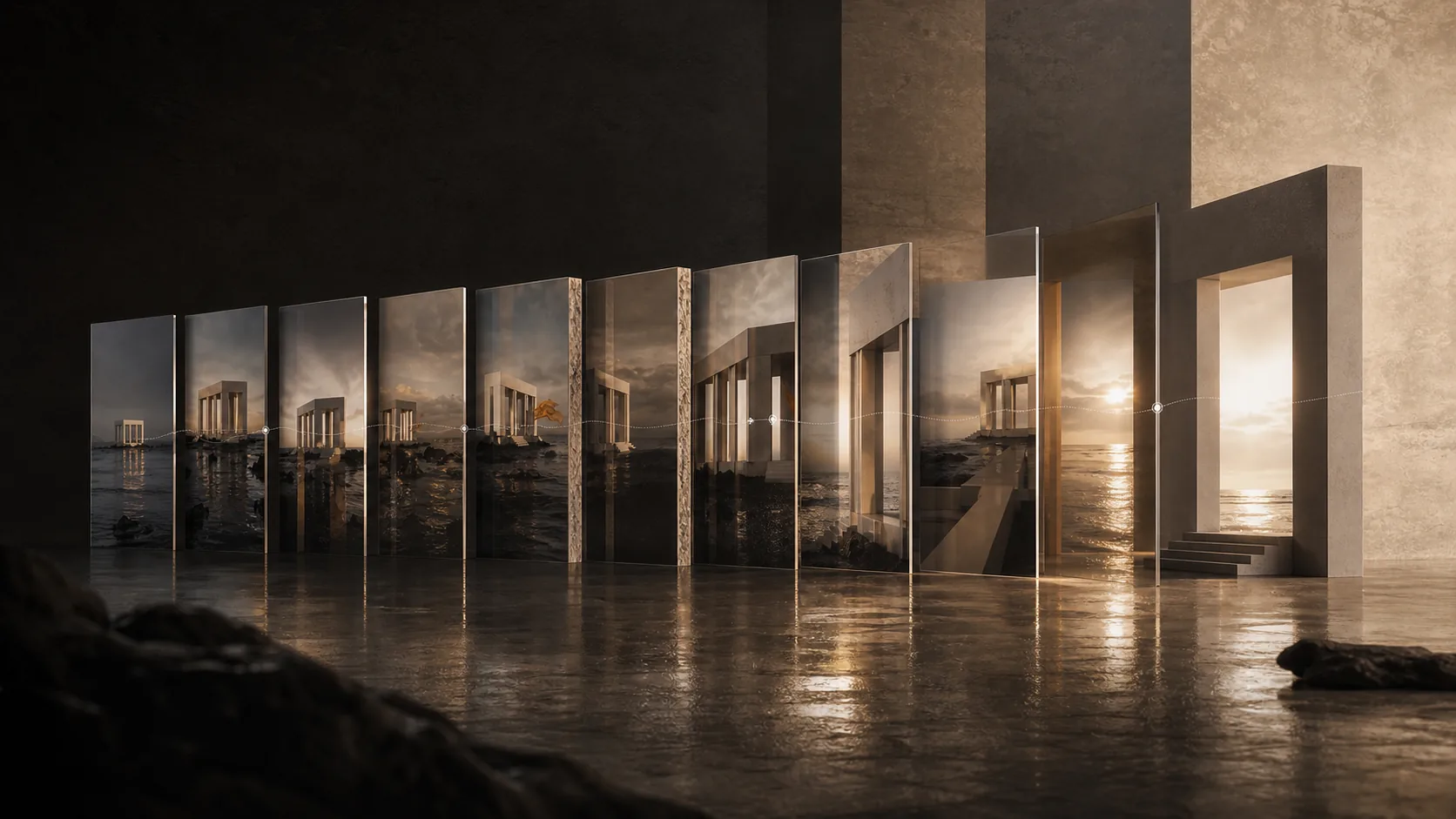
Concept visualization of many related pavilion shots arranged through space in a measured editorial rhythm that resolves into one coherent sequence.Concept visualization / future editorial study

The edit

Editing is directed structure.

Shots do not become a film by standing next to one another. Performance, duration, adjacency, withheld information, and the exact frame of a cut determine what the audience experiences.

Saga works against the same narrative intent that began in Mimir, comparing the emerging cut with the film's energy, tension, intimacy, and revelation while keeping every decision inspectable and overridable.

One cut / visible decisions

Editorial judgment stays attached to every frame.

Saga can compare takes, shape pacing, test transitions, and converge against narrative intent. A human editor can make, inspect, override, or refine the same decisions because every version resolves into the same frame-accurate OTIO structure.

  1. 01 / ReviewAvailable takesPerformance and quality
  2. 02 / ChooseShot selectionPurpose and continuity
  3. 03 / ShapeCut rhythmTrim, order, transition
  4. 04 / CompareNarrative fitWaveform and intention
  5. 05 / LockShared OTIOPicture and provenance
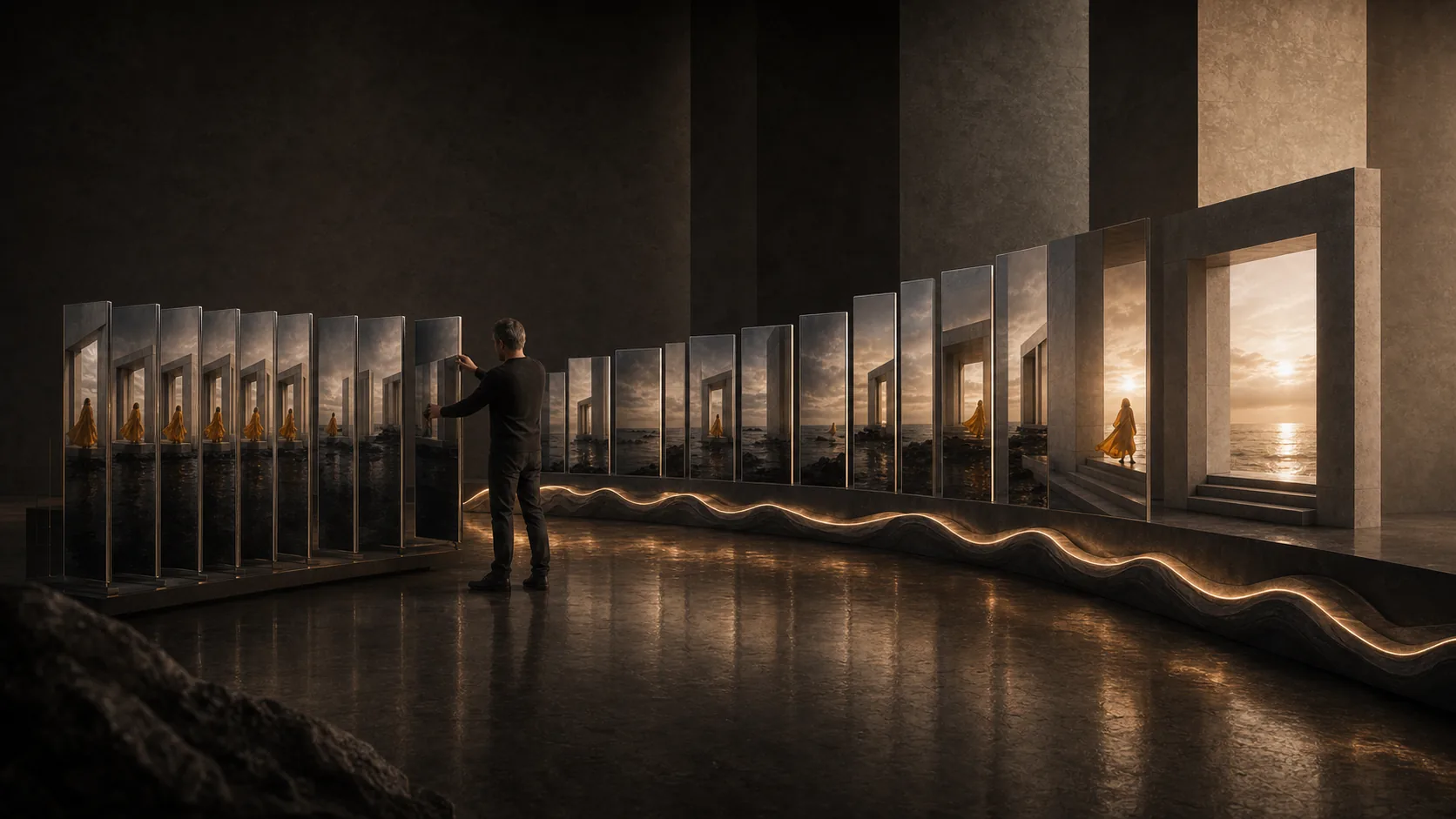
Concept study of a human editor selecting among alternate pavilion takes and shaping them along a physical narrative waveform.Concept visualization / editorial room study

01 / The edit

Alternatives become rhythm.

Performance, technical quality, continuity, duration, and adjacency are evaluated in context. The narrative waveform gives the emerging sequence a shape to compare against without pretending that a metric can replace editorial taste.

Material
Shots · takes · script · waveform
Control
Selection · trim · order · transition
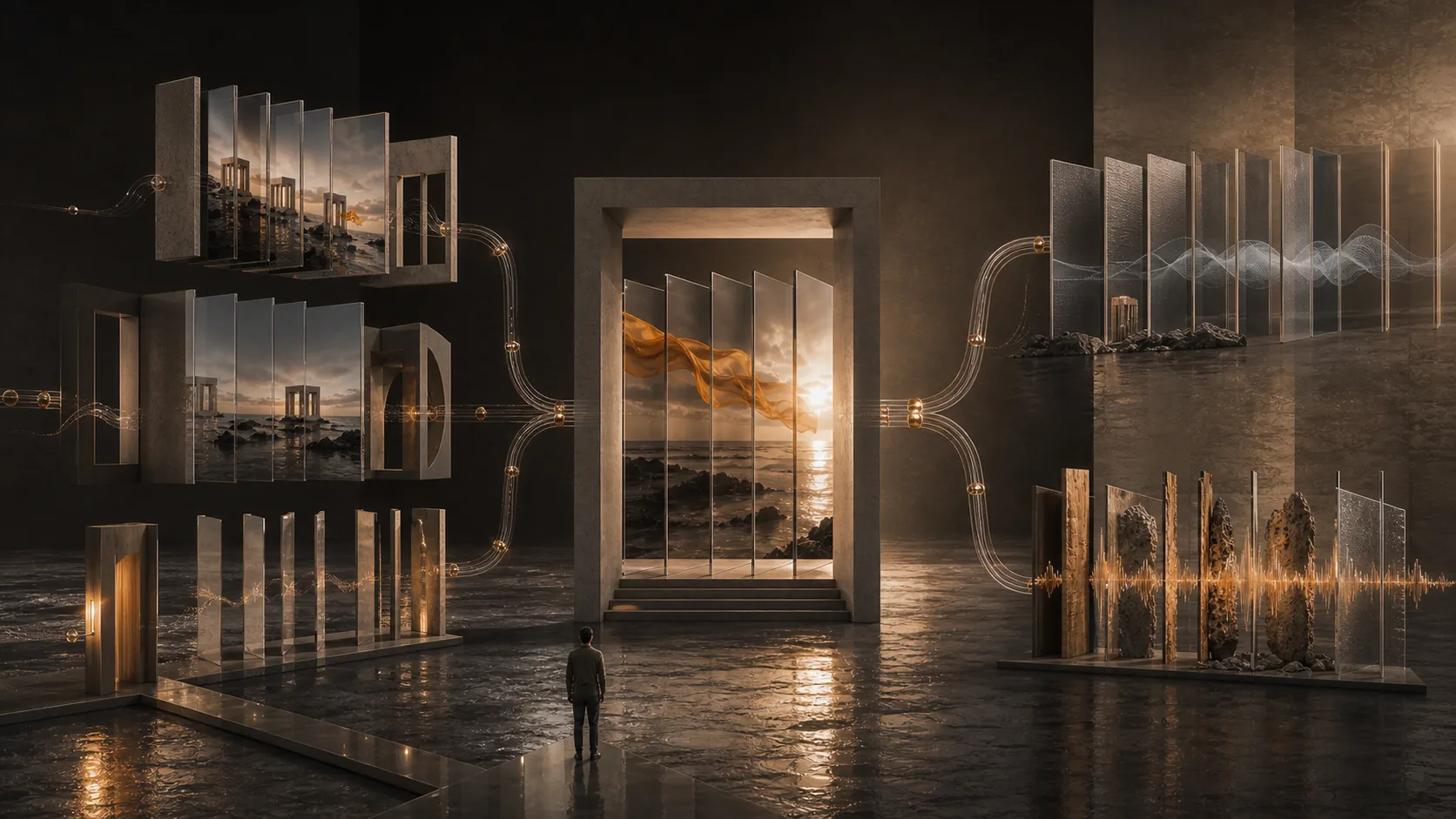
Concept study of alternate picture sequences converging through provenance paths into one locked sequence that branches to music and sound.Concept visualization / picture-lock study

02 / The lock

One timeline remembers how it arrived.

Each selected take, trim, transition, evaluation, and revision retains decision provenance. Picture lock is not a flattened result; it is the exact OTIO structure shared with review, conform, music, and sound.

Authority
Human · Saga · collaborative cut
Handoff
Frame-accurate OTIO

A common structure, not a closed editor

Saga does not require filmmakers to surrender the editorial room. OTIO carries the decisions, and human review can happen wherever the production prefers while the same authoritative timeline continues downstream.

Editorial architecture

A cut that remains inspectable at every frame.

  1. 01 / PoolShots + intent

    Finished takes, performance evidence, scene structure, beat targets, and narrative waveform.

  2. 02 / ChooseShot selection

    Performance, technical quality, continuity, alternatives, and surrounding context shape the choice.

  3. 03 / AssemblePace + transition

    Frame-accurate trims, shot order, hard cuts, dissolves, match cuts, and J/L structure form the sequence.

  4. 04 / EvaluateWaveform convergence

    The emerging cut is measured against script intent, then revised where emotional divergence matters.

  5. 05 / LockShared timeline

    Picture, dialogue structure, editorial versions, and downstream change events resolve into OTIO.

Editorial contractsOpenTimelineIO · EDL interchange · SMPTE timecode · OCIO/ACES delivery path

The editorial room

Choose. Shape. Lock.

01 / Choose

Find the right performance.

Available takes are weighed against dramatic purpose, technical quality, continuity, and the surrounding sequence.

02 / Shape

Make rhythm visible.

Trim, transition, pace, and shot order are iterated against the narrative waveform and the felt experience of the scene.

03 / Lock

Give post one clock.

OTIO preserves the frame-accurate structure whether the cut is made by Saga, a human editor, or both.

Selection / The available takes
Rhythm / Duration and adjacency
Lock / One shared timeline

The handoff

Picture lock opens two parallel crafts.

Saga receives

Finished shots, performances, and narrative shape.

Mimir supplies context and available media; Saga makes and records the editorial decisions.

Saga delivers

One frame-accurate source for music and sound.

The locked OTIO and cut-stage waveform dispatch together to Bragi and Heimdall while dialogue stays attached to picture.

Picture lock / Branch 06A

Hear the score in Bragi.